Which fabric and foam should you choose for a custom sofa?
Comfort depends on fabric, upholstery, seat depth and support. Compare them together using samples and a seating trial.
AI-generated illustrations: not Topart Home projects, contractual samples or standardised tests.
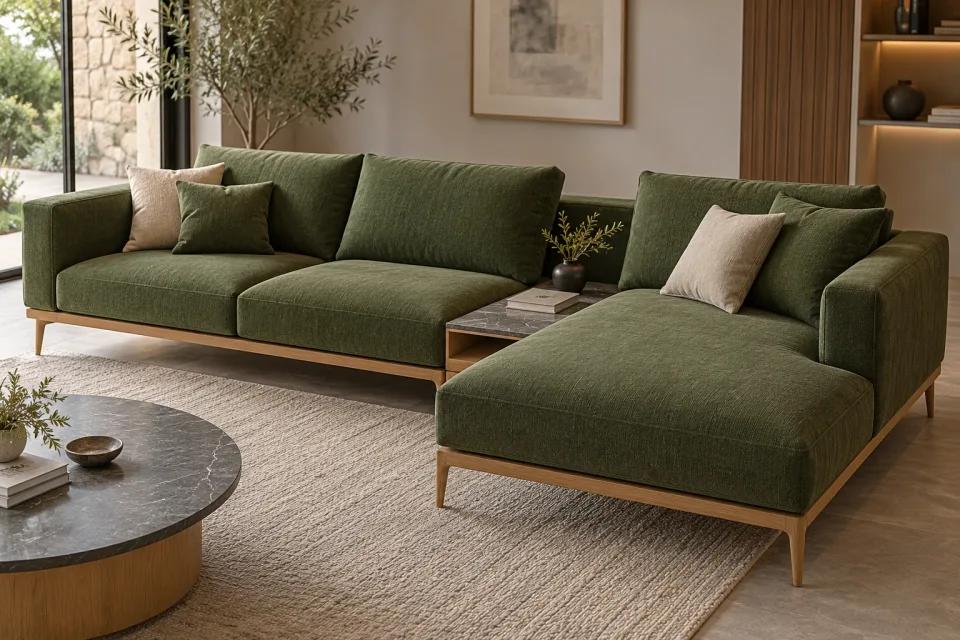
1. Fibre composition and fabric texture are different
Cotton, linen and wool are natural fibres; polyester and polyamide are synthetic fibres. Blends combine fibres. Velvet, chenille, bouclé and plain weave describe constructions or textures: a velvet can use different fibres.
Scroll the table horizontally if needed.
| Fibre | What to appreciate | What to check |
|---|---|---|
| Cotton | Feel and natural appearance | Staining, creasing and colour fastness |
| Linen | Texture and character | Creasing and care for the chosen finish |
| Wool | Feel and fibre elasticity | Care and sensitivity of the specific construction |
| Polyester | Varied textures, often practical care | Pilling and comfort of the specific fabric |
| Polyamide | A strong fibre used in blends | Full composition and test results |
| Blends | A balance of properties | Percentages and technical data |
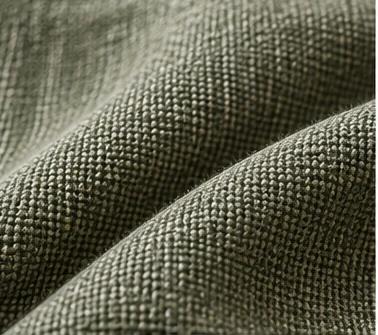
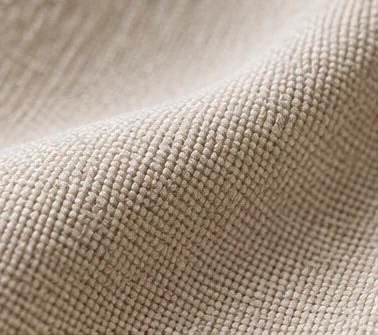
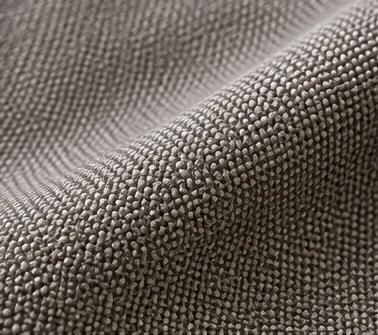
2. Velvet, bouclé and chenille
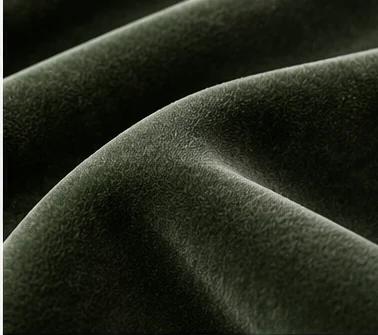
Velvet: a pile surface whose appearance changes with the light. Check pressure marks and pile direction.
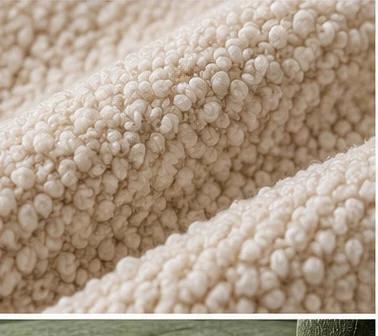
Bouclé: small textured loops. Claw or object snagging depends on the construction; examine a sample if you have pets.
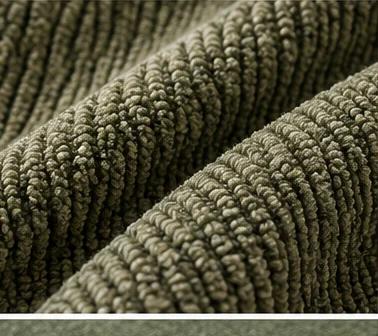
Chenille: fluffy-textured yarns provide relief and a soft feel. Check abrasion and pilling results for the exact reference.
None of these names guarantees durability. Two similar-looking fabrics can perform very differently.
3. Martindale: abrasion resistance
The Martindale test, covered by the ISO 12947 family, subjects fabric to repeated rubbing in standardised conditions. Results are often given in cycles. A high result can be useful for everyday seating, but it is not a lifespan in years. Commercial thresholds differ by brand and market.
Also compare pilling results (ISO 12945, depending on method), colour fastness to light (ISO 105-B02) and rubbing (ISO 105-X12), seams, dimensional stability and care instructions.
Indicative commercial benchmarks sometimes include 15,000 cycles for moderate domestic use, 25,000 or more for ordinary domestic use and higher values for intensive use. These are not universal official classes; test conditions must be comparable.
4. Children, pets and daily care
Choose maintenance that fits your routines, a surface less prone to snagging, suitable colours and reliable technical data. Check a sample’s feel and appearance against the light. A fabric marketed for pets does not withstand every scratch.
5. What does Aquaclean do?
Aquaclean is an easy-clean technology used on certain fabric collections. The manufacturer explains that many everyday stains can be treated with water following its method. Remove excess material, moisten and treat gently according to the collection’s instructions. Results depend on the stain, response time and fabric reference. Easy cleaning does not mean waterproof or impossible to stain. Availability for your project needs to be checked.
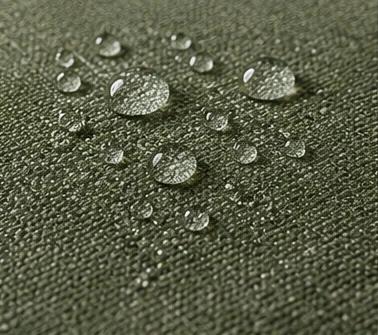
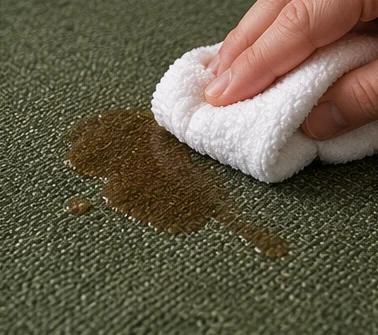
Manufacturer’s guidance: aquaclean.com ↗
6. Foam: density, firmness and resilience
Density is mass per unit of volume, measured in kg/m³. Firmness describes resistance to compression. Resilience concerns elastic behaviour and rebound. These are different properties: equal-density foams can feel different.
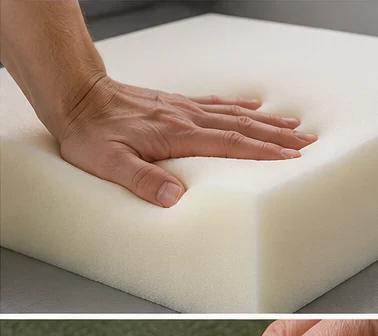
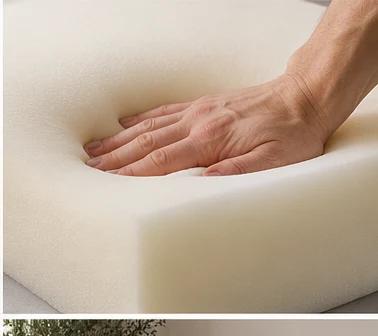
High-resilience HR foam is used for support and recovery, depending on its formulation and quality. Viscoelastic foam reacts differently to pressure and temperature; it is not necessarily suitable as the sole material for an entire seat.
7. An example: HR 42 seat and 25 backrest
A composition to discuss with the upholsterer could use 42 kg/m³ HR foam in the seat and 25 kg/m³ foam in the backrest. Firmness, thickness and layers must then be adjusted to the desired comfort. These densities do not prescribe a universal sensation or guarantee a lifespan. The exact foam reference and its technical data are essential.
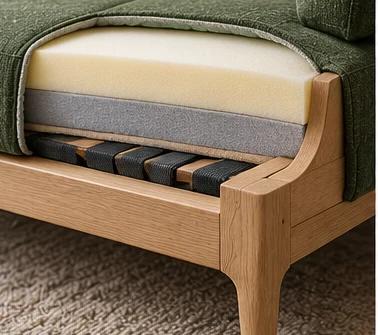
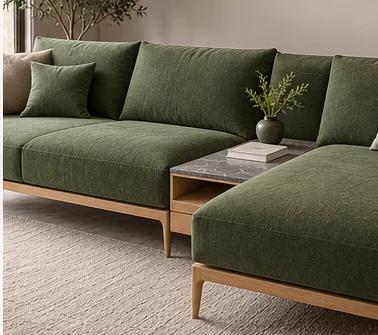
A deep seat with an inclined back feels different from a short, upright seat even with the same foam. User height, posture, the support below the cushion, batting and cover also affect comfort.
8. Try the seating before choosing
- Sit for several minutes rather than a few seconds.
- Check that your feet rest comfortably on the floor.
- Assess lumbar support and useful seat depth.
- Try the middle and the area near the armrests.
- Compare at least two firmness options if possible.
- Ask for the exact foam and layer composition.
9. Match the covering to your priorities
Scroll the table horizontally if needed.
| Priority | What to examine |
|---|---|
| Children and frequent stains | Cleaning instructions and easy-care references |
| A dog or cat | Snagging, weave, hair, wear and cleaning |
| Intensive use | Martindale, pilling and colour fastness |
| A warm feel | Velvet, chenille or bouclé, depending on data |
| Natural touch | Suitable linen, cotton, wool or blends |
| Personalised seating | Density, firmness, resilience, thickness and depth |
Frequently asked questions
Is 30,000 Martindale enough?
It is one indicator for domestic use. Ask about the protocol and other tests; it does not predict lifespan on its own.
Is polyester always worse than a natural fibre?
No. Yarn, weave, finishing and measured performance also determine quality.
Does bouclé suit cats?
Some loops can catch claws. Risk depends on the exact fabric; examine a sample.
Does Aquaclean make fabric waterproof?
No. It helps clean certain stains according to the manufacturer’s instructions.
Is 42 kg/m³ foam necessarily hard?
No. Density and firmness are different properties.
Why use a different density for the backrest?
Loads and desired sensations differ. Select density together with firmness, thickness and construction.
Can you replace only the cushions?
Sometimes, depending on the frame and covers. An inspection is needed.
Design a sofa around your needs
At Topart Home in Brussels, fabric and upholstery form part of the design of custom seating. Explore our sofa and seating projects or contact us.
Sources
- Aquaclean, technology and care: aquaclean.com ↗
- EUROPUR, flexible polyurethane foam: europur.org ↗
- ISO textile standards, applicable editions to check: iso.org ↗
All images in this guide are original AI-generated illustrations. They do not represent Topart Home projects, contractual fabric samples or standardised fabric and foam tests.