Custom furniture: which woods and colours work together?
Oak, beech, ash or walnut: compare their furniture applications and coordinating wall and textile colours. With visual palettes and examples from our projects.
1. Which woods suit custom furniture?
Compare four hardwoods according to use: a table, chair and wardrobe front need different construction. These applications do not replace sizing shelves and tops for their loads.
Scroll the table horizontally if needed.
| Species | Value for furniture | Suitable applications | Check before choosing |
|---|---|---|---|
| Oak | Hard wood with a pronounced grain | Tables, bookshelves, desks, fronts | Select board character and finish; see our bookshelf below |
| Beech | Fine grain, suitable for bending | Chairs, bases, curved components | Careful drying; steaming gives a pinkish tone |
| Ash | Pale wood, distinct grain, suitable for bending | Furniture, curved components, veneered fronts | Can yellow; compare a finished sample |
| American walnut | Contrasting brown, used for fine cabinetry | Desks, living-room furniture, fronts and veneers | European walnut is a different species; specify which is offered |
References: oak, manufacturer HMT, beech, Hout Info Bois, ash, Hout Info Bois catalogue, American walnut, AHEC.
2. Which decorating colours work with these woods?
- WallsLinen
- Painted accentSage green
- TextilesEcru
- WallsOff-white
- Painted accentGrey blue
- TextilesGreige
- WallsWarm white
- Painted accentTerracotta
- TextilesSoft green
- WallsGreige
- Painted accentOlive green
- TextilesCream
Schematic compositions suggested by Topart Home. Screen colours are approximate; furniture fills do not reproduce wood grain or a real wood sample.
These palettes concern walls, painted furniture sections and textiles, rather than wood stains. They are our composition suggestions, to try with your flooring and light.
- Oak + linen + sage green: quiet walls, green niches or doors and ecru textiles let the grain remain the focus.
- Beech + off-white + grey blue: blue contrasts with the warm wood tones without introducing another bright colour.
- Ash + warm white + terracotta: use terracotta on one wall or a painted accent alongside the wood grain.
- Walnut + greige + olive green: light walls and cream textiles retain light surfaces around the brown furniture.
3. Two combinations in our projects
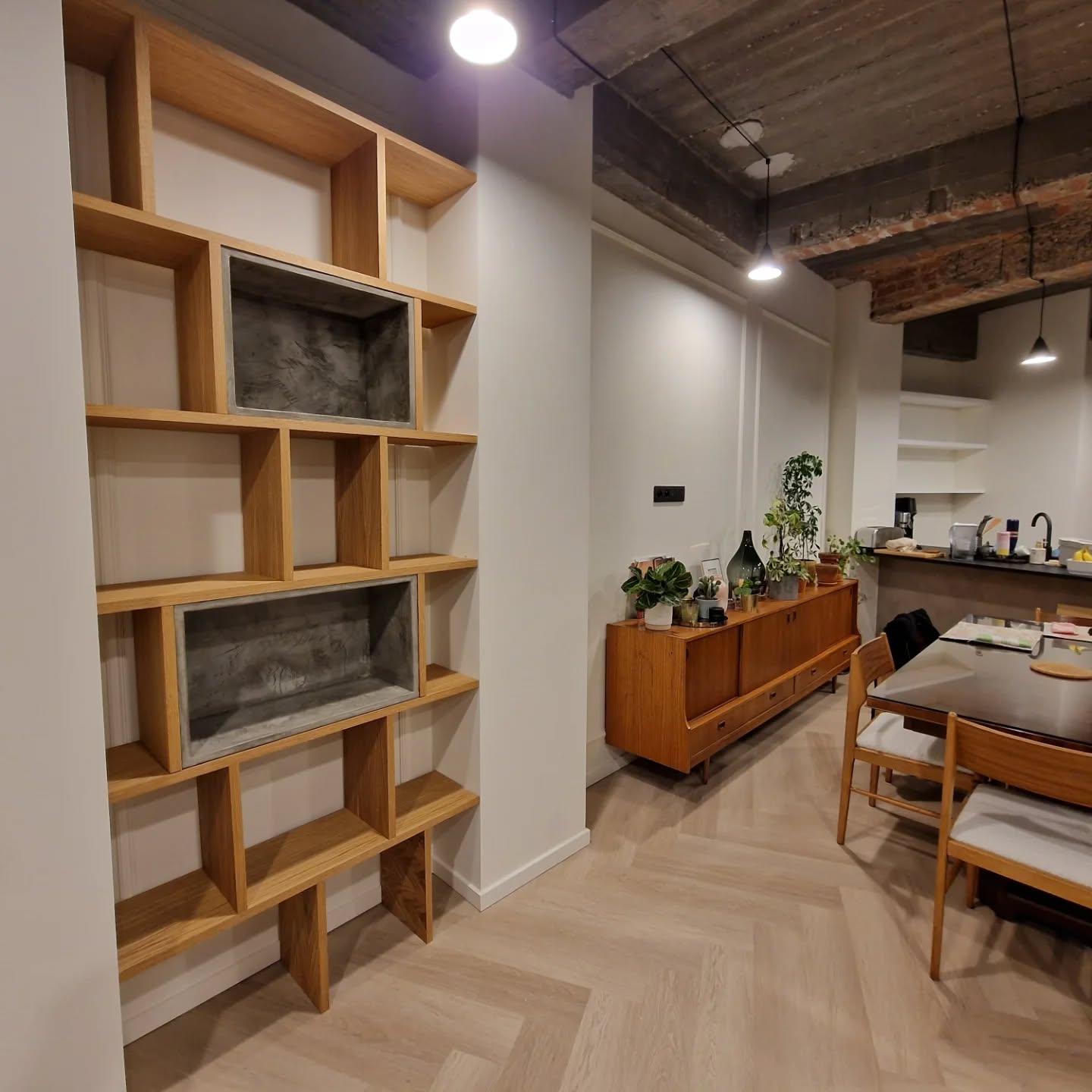
Oak and mineral surfaces: our oak and microcement bookshelf shows different materials working within one piece.
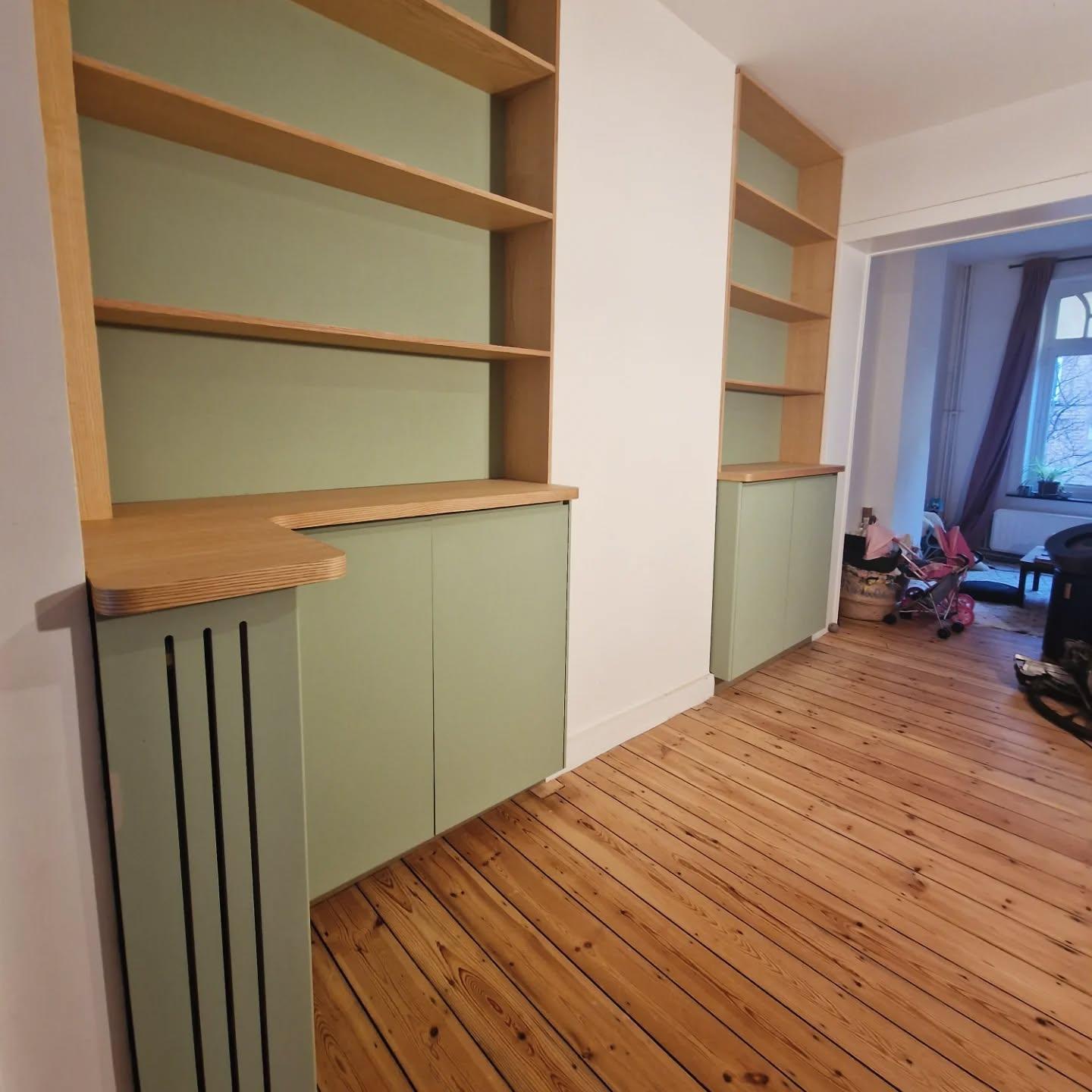
Ash and painted colour: this bookshelf with radiator cover combines ash veneer, Rubio Pure and MDF painted in a Farrow & Ball shade. The paint reference is undocumented, so we do not assign it a colour name.
4. Trending colours: ideas for 2026
In its 2026 colour forecast, Little Greene highlights browns, honey/caramel tones and aubergine shades. This is that brand's selection rather than a universal rule.
Our suggestions with wood: an aubergine accent beside oak, or caramel seating near walnut furniture. The manufacturer's photos and paint references appear in the linked article. Keeping large surfaces quieter makes it easier to change accents later.
5. Assess wood and colour together
Solid wood and veneer use a species differently: veneer is a thin layer of real wood applied to a substrate. A wardrobe can combine veneered fronts with painted cabinets. Our dressing room with foldaway table has oak-veneered fronts.
Compare a wood sample with its intended finish and a large painted card in the room, by day and in the evening. Little Greene explains how to use paint samples. A screen alone cannot confirm a colour.
Frequently asked questions
Oak or beech for a table?
Oak offers a more pronounced pattern; beech has a subtler grain. Compare finished tops and check joints, dimensions and intended maintenance.
Can furniture wood differ from the flooring?
Yes. Our palettes are starting points: compare them against the existing floor to choose a contrast rather than seek an exact imitation.
Does walnut work in a small living room?
It can form part of a scheme with light walls and cream textiles. Assess the proportion of dark wood in the design and actual light.